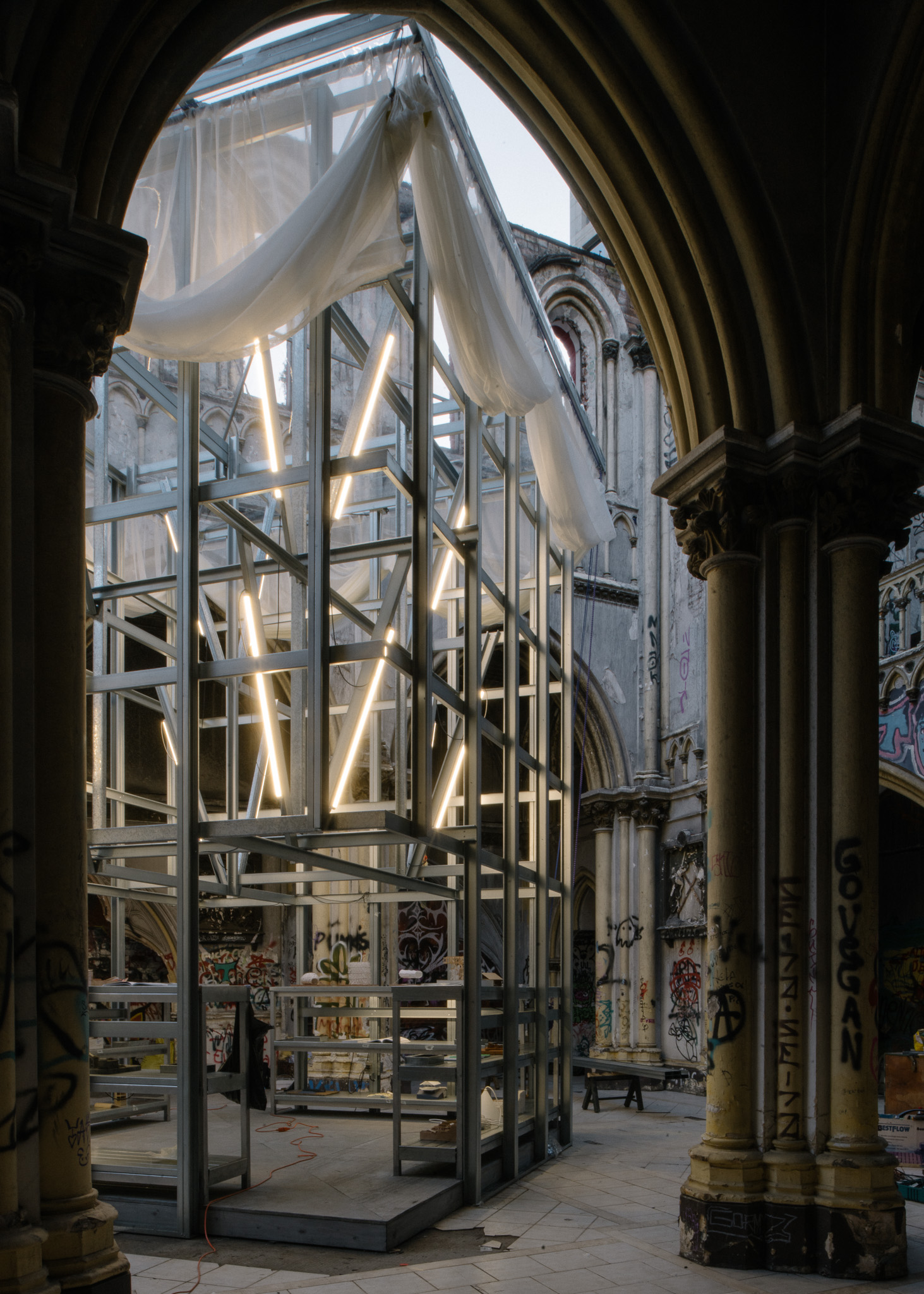
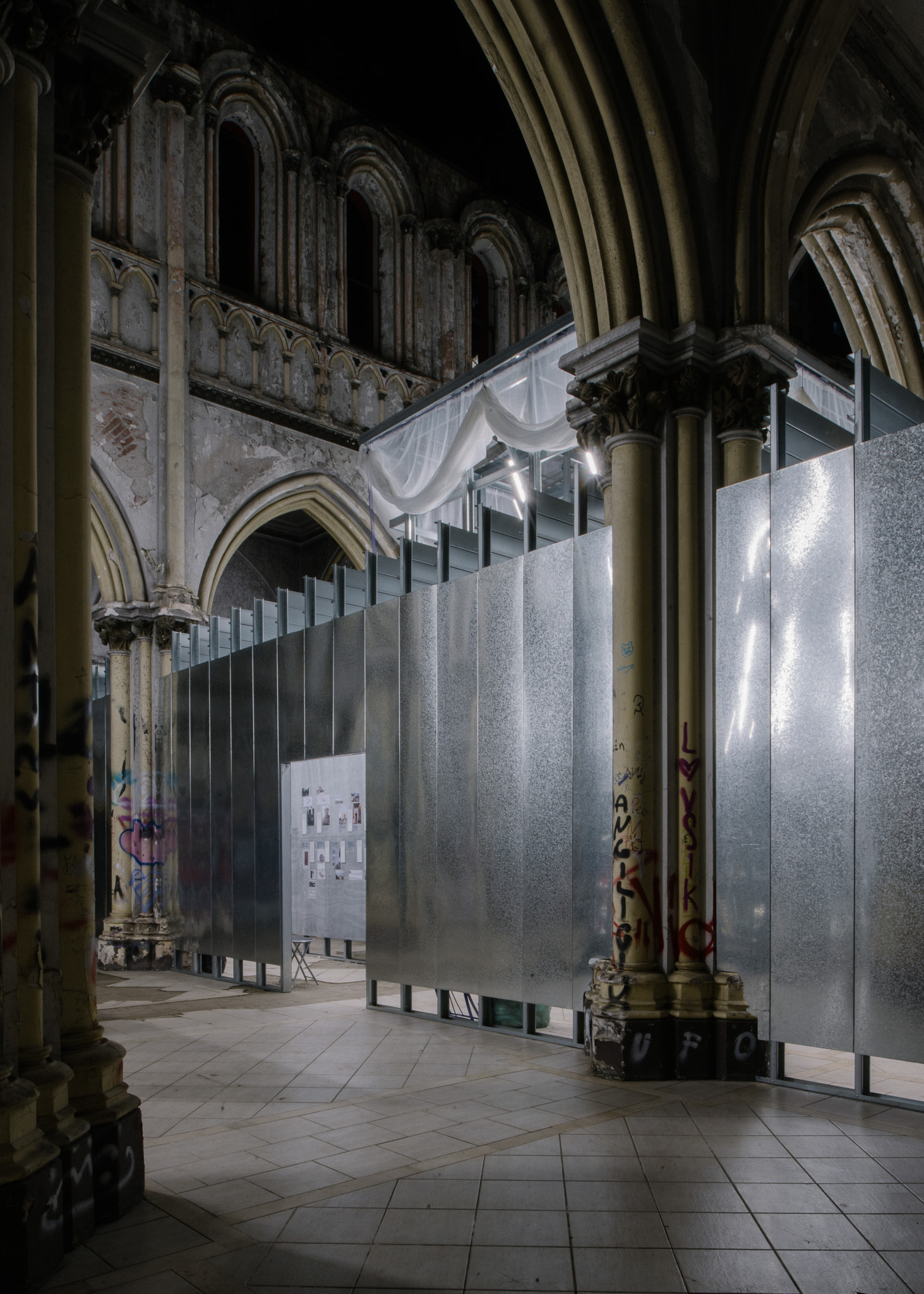
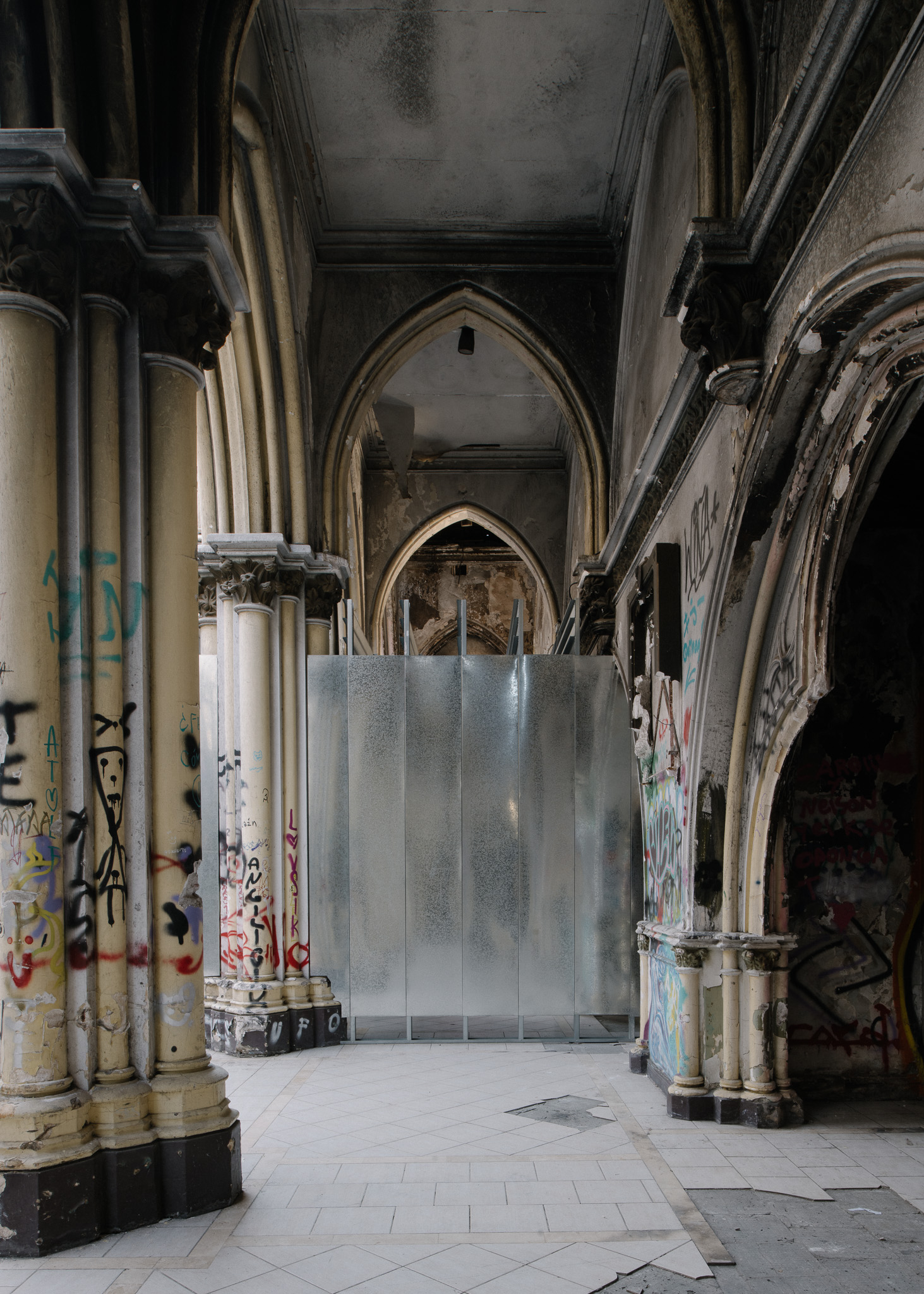
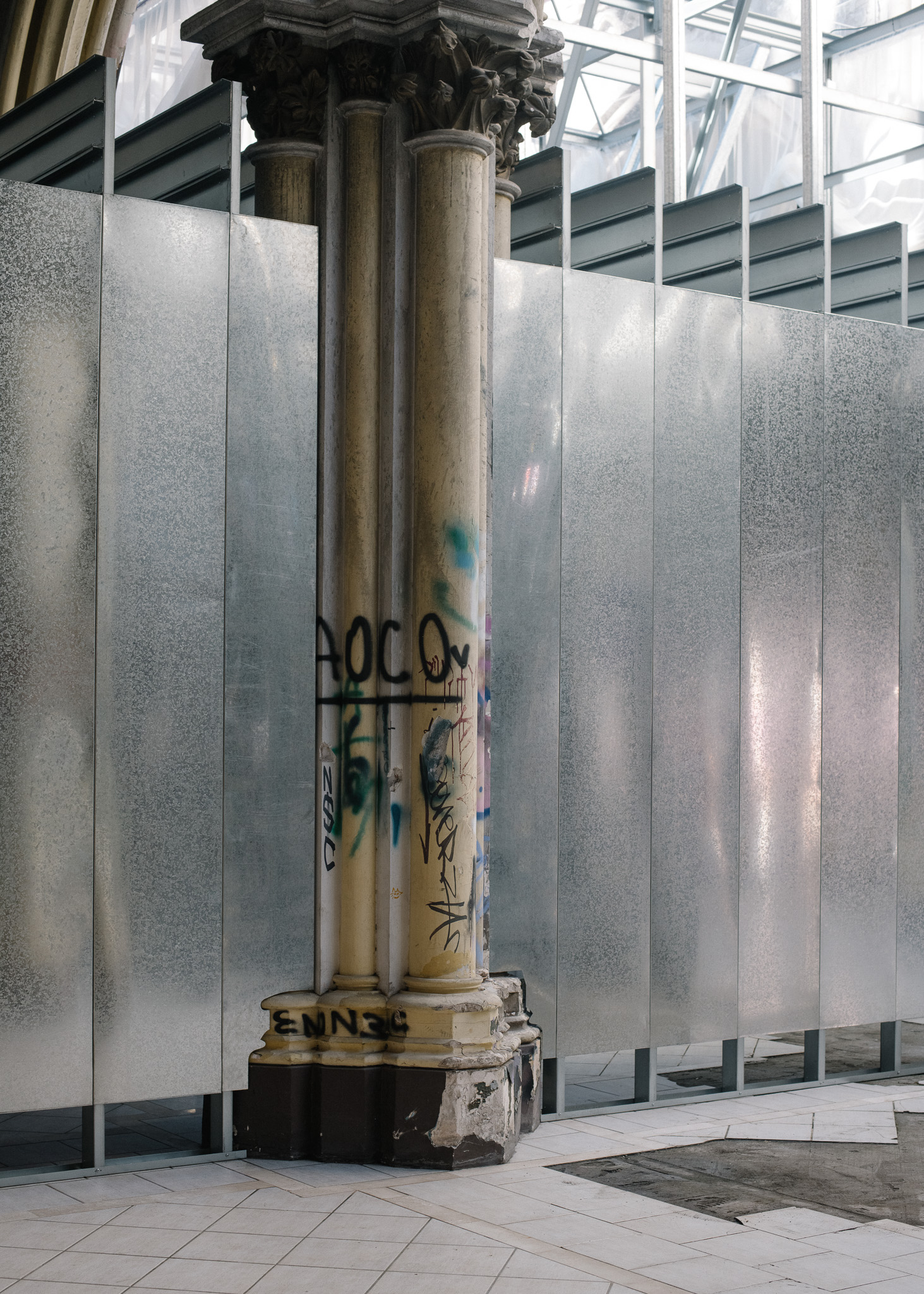
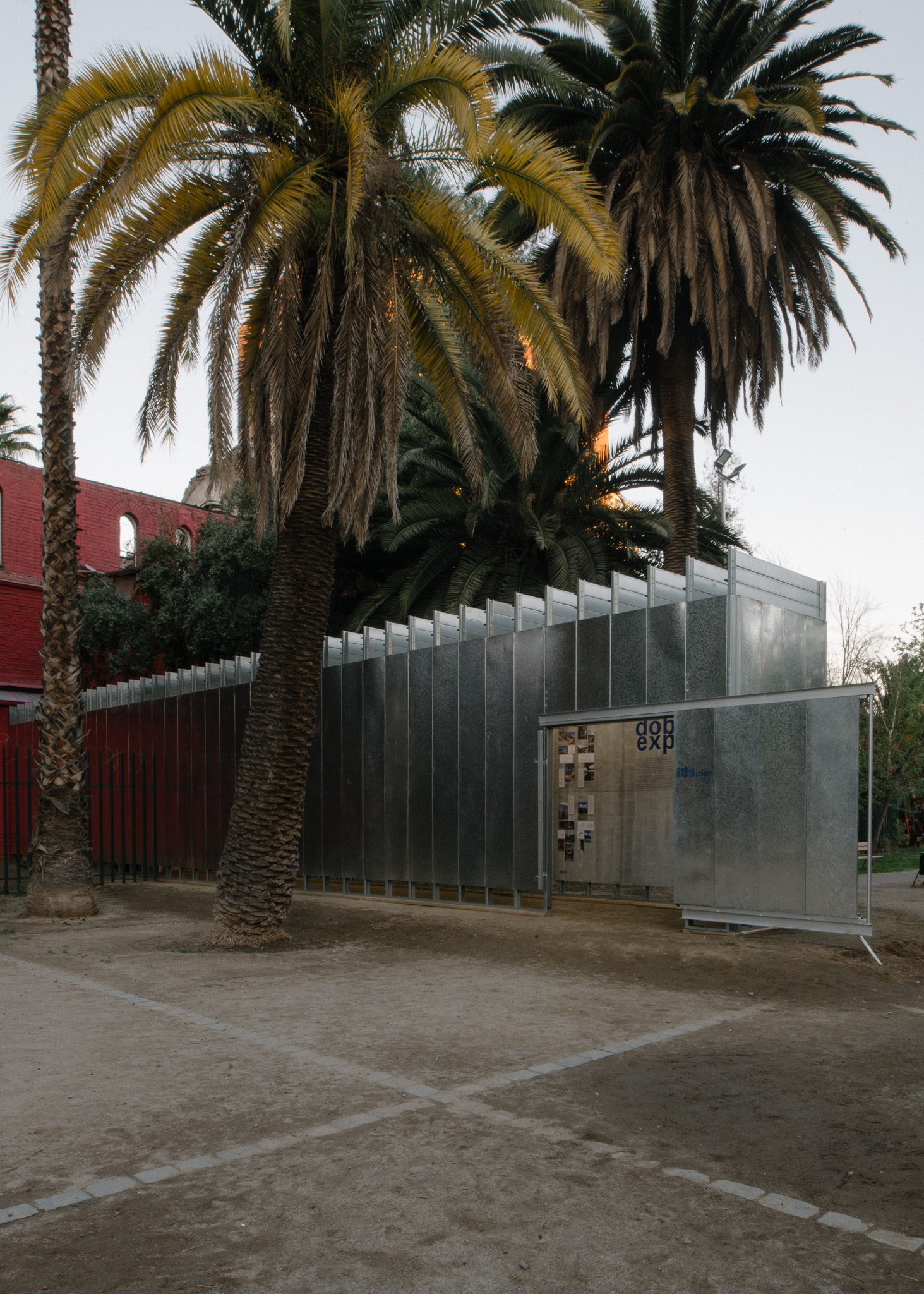
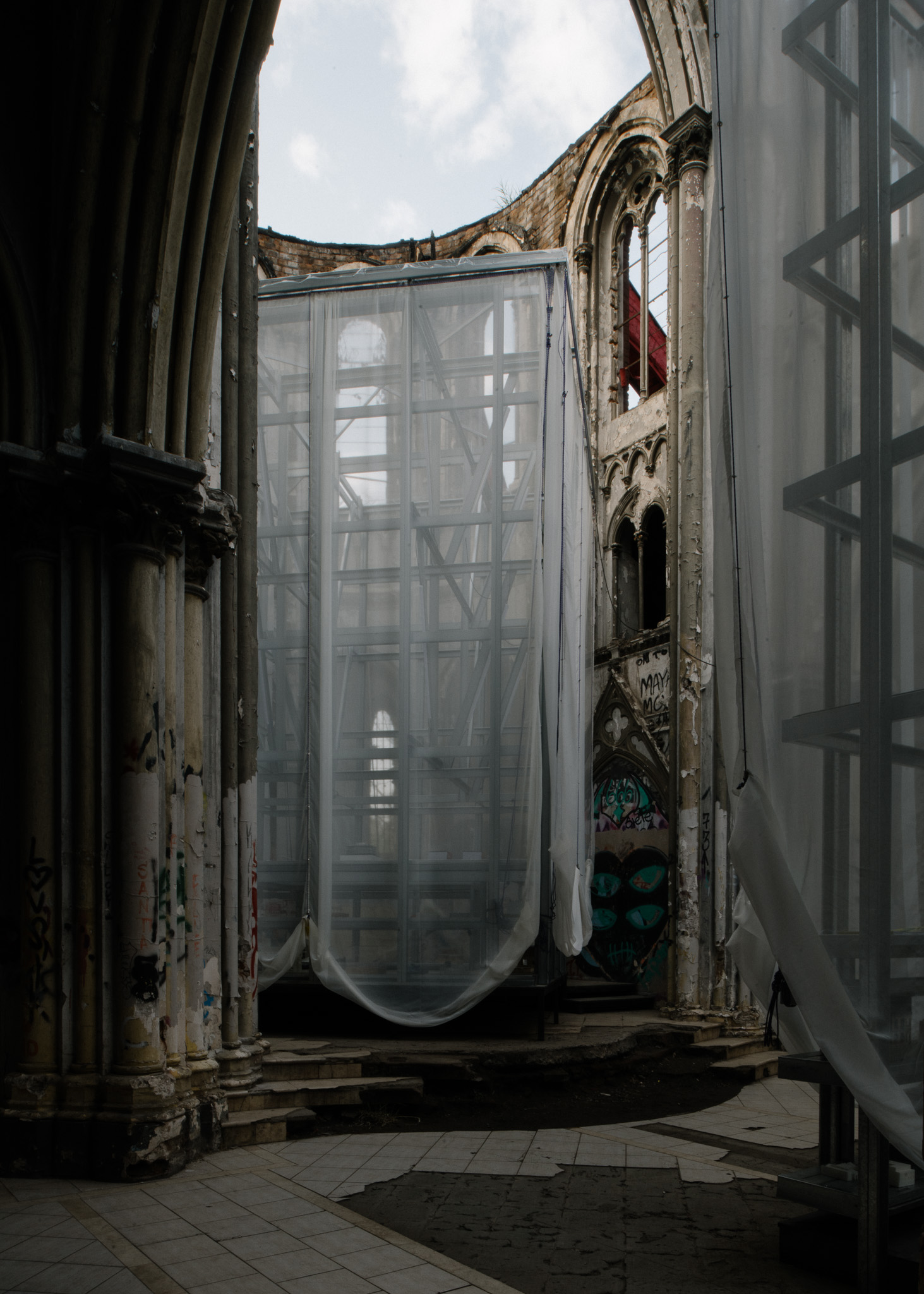

Installed within the ruin of the former Church of San Francisco de Borja, the intervention conceived for the XXIII Bienal de Arquitectura y Urbanismo de Chile addresses how to construct meaning within a space emptied of its original program and signification.
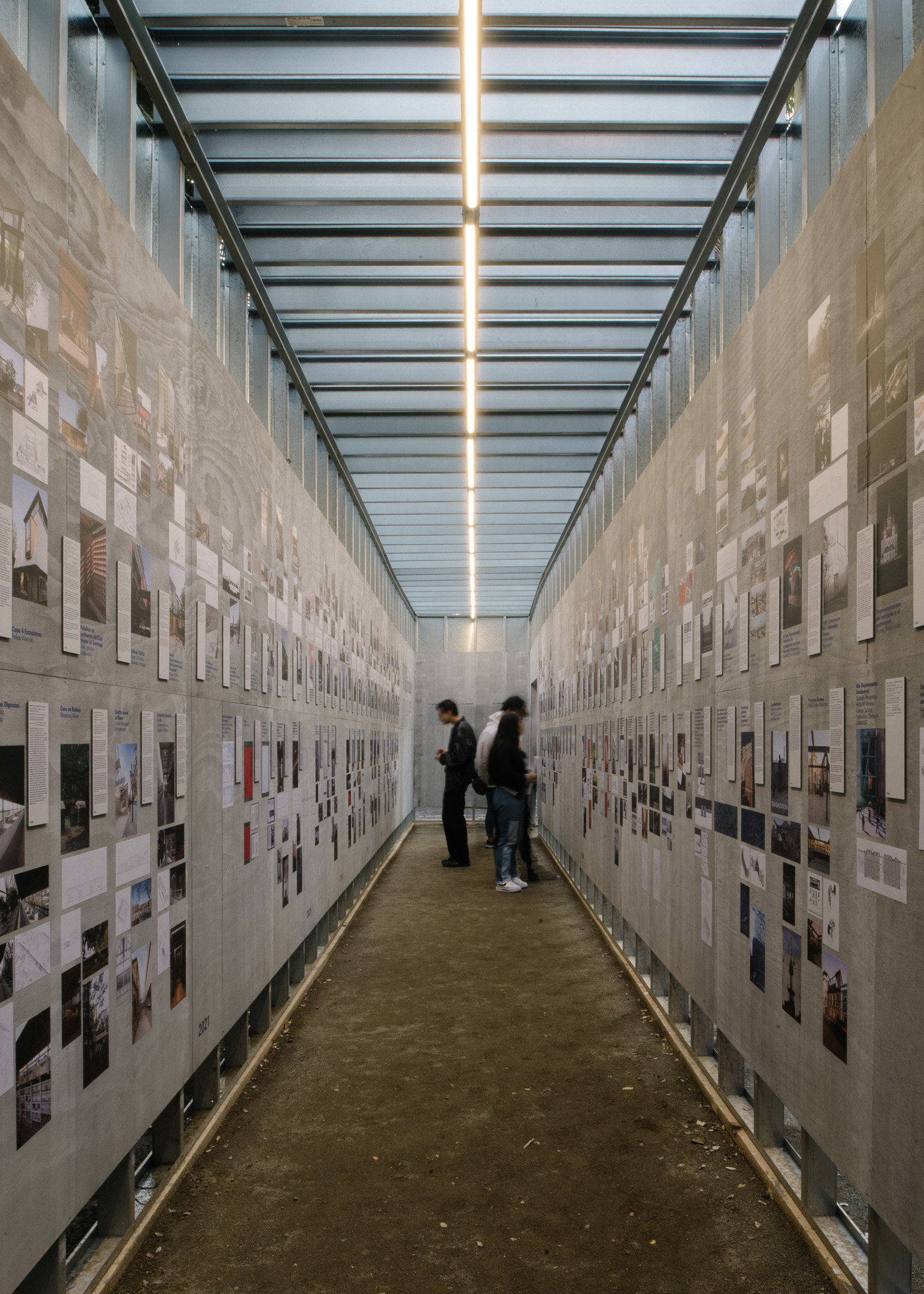
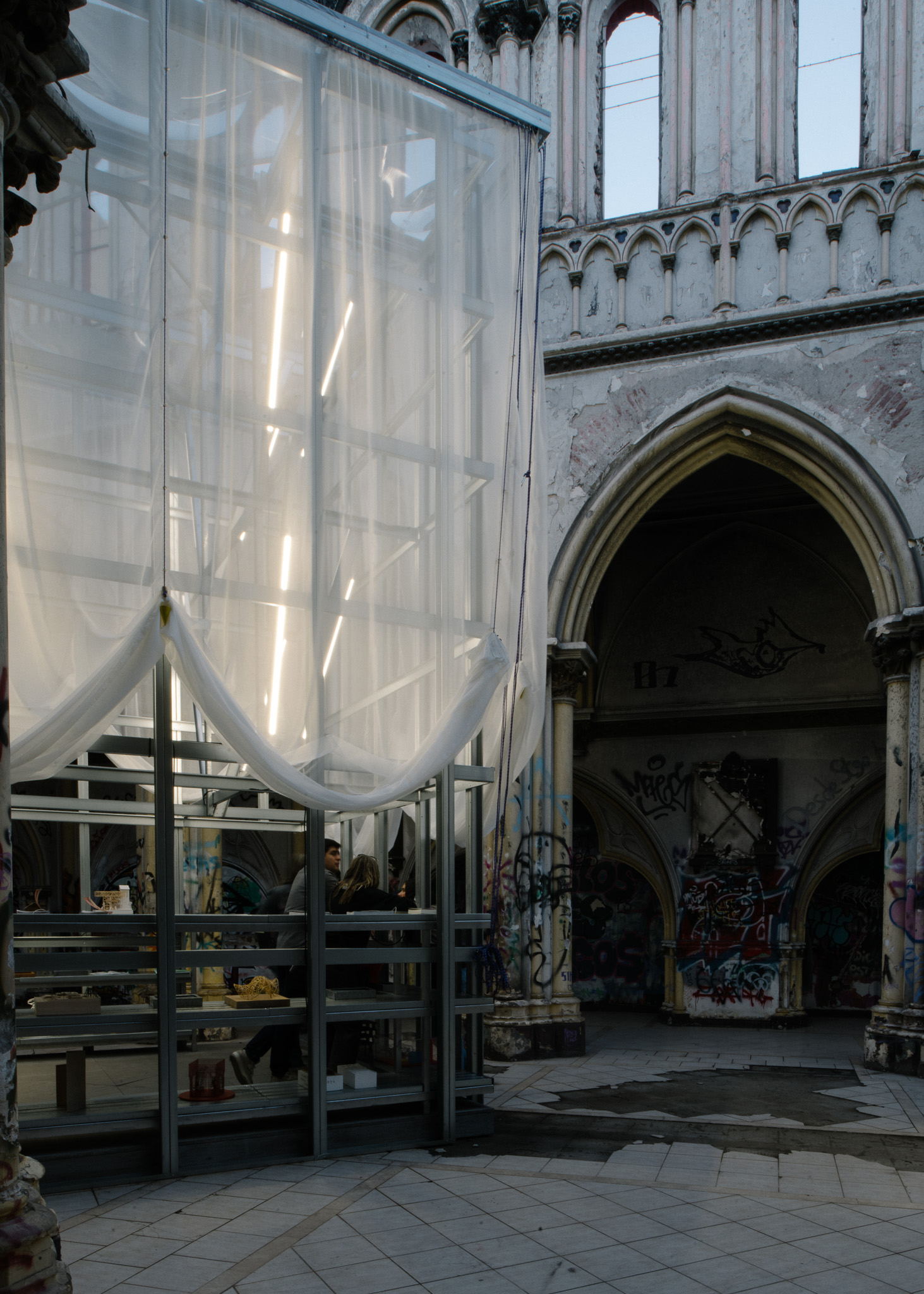
The project is organized through three operations: a transversal bar containing the two-dimensional exhibition, three interior pavilions for models and publications, and an exterior stage opening the ensemble toward the city. Together they form an infrastructural framework through which the ruin is reread.
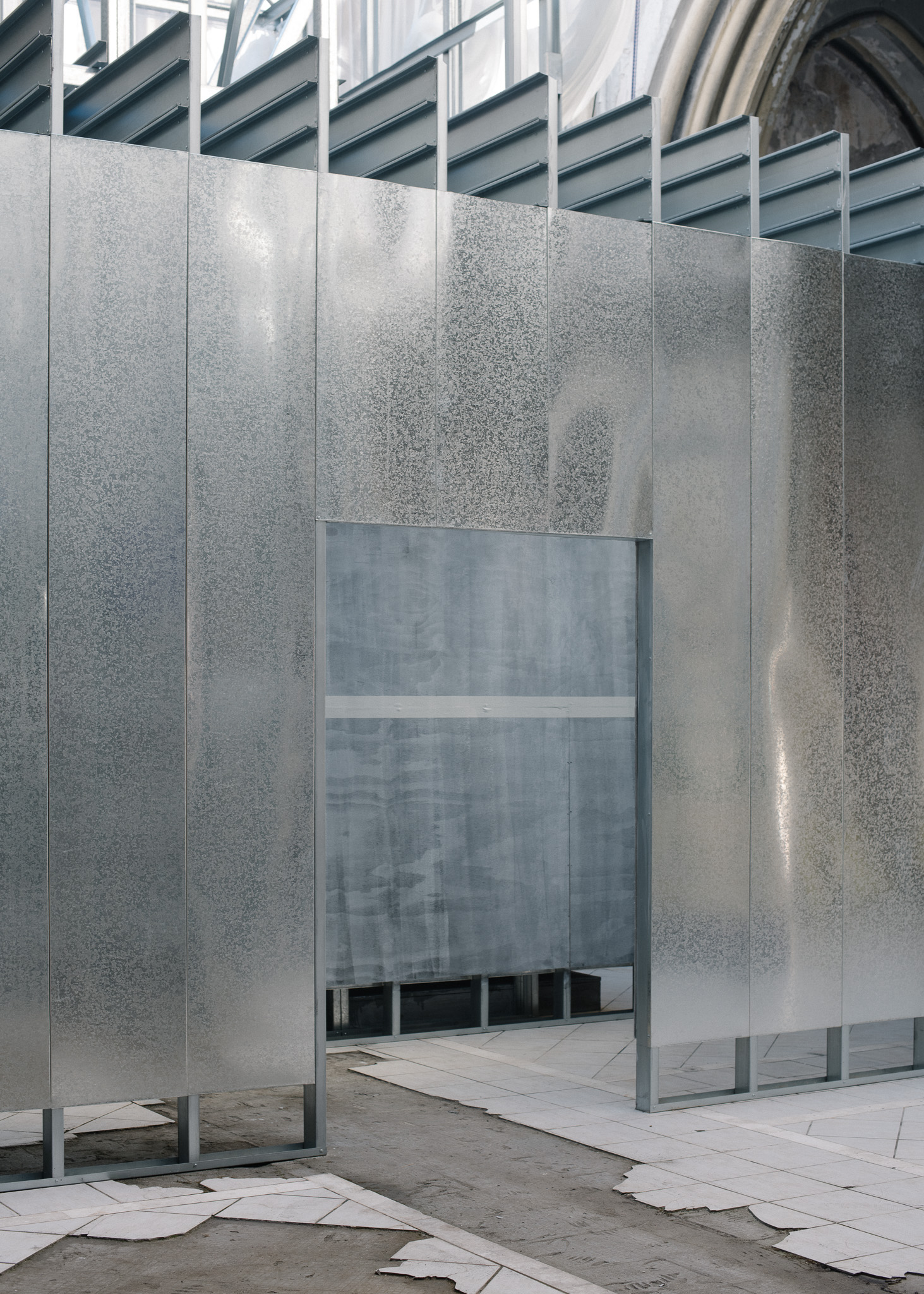
Built from galvanized steel profiles assembled with simple crossings, the structures reproduce the church’s stripped condition and expose what construction usually conceals. The use of this ordinary, often invisible system becomes a conceptual gesture—positioning structure as both medium and reflection.
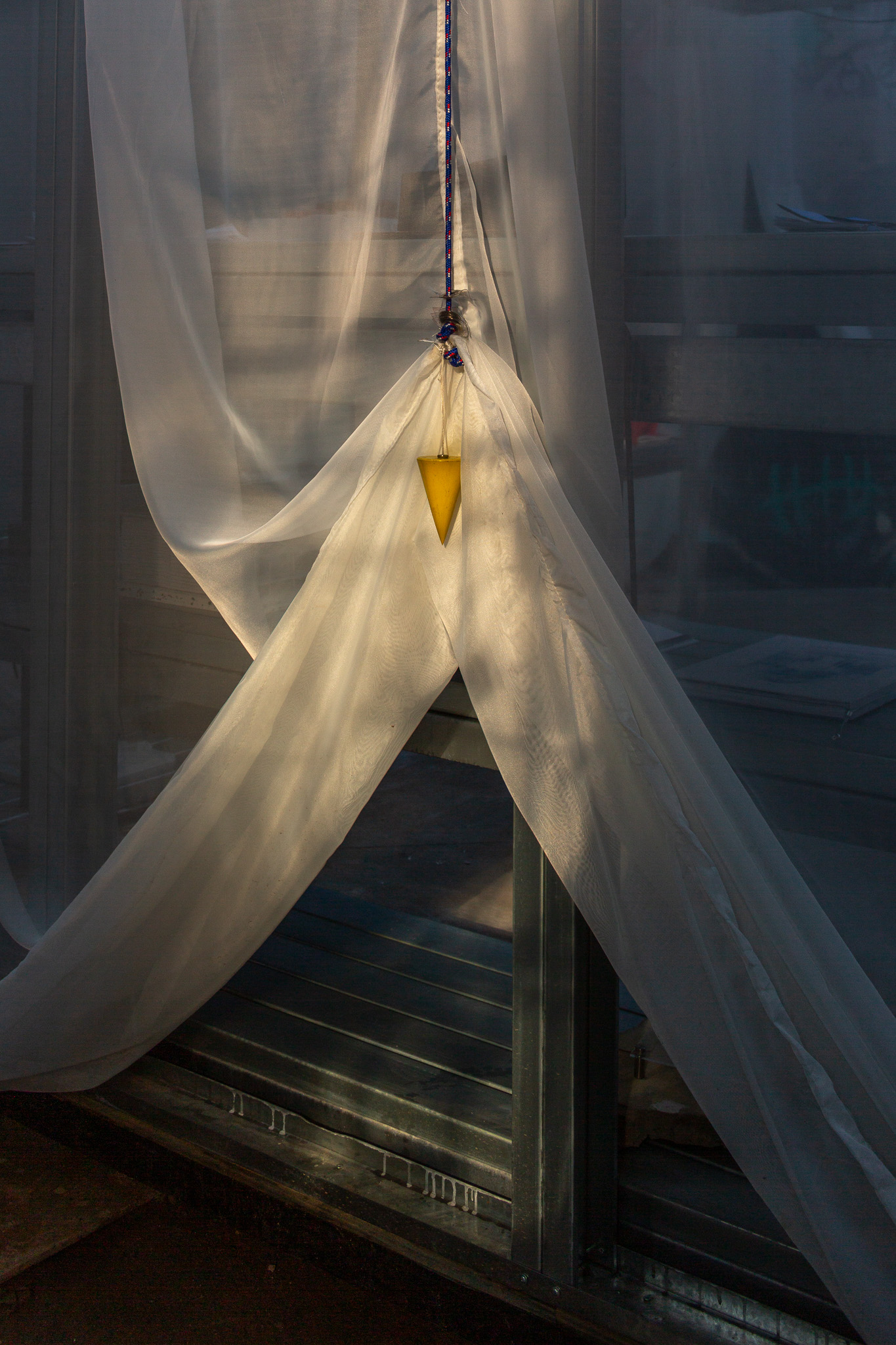
Inside, the pavilions displace the church’s axis, transforming the procession into a contingent field of paths that negotiate between historical geometry and contemporary occupation. Curtains suspended from the frames react to air and light, introducing a final layer of instability.
The project redefines the ruin by thinking structure as an autonomous field of interpretation—an architecture of neutrality and abstraction, where presence is articulated through its own construction.
Iván Bravo
Ignacia Barba
Juan Oyarzún
Óscar Aceves Álvarez
Ministerio de las Culturas, las Artes y el Patrimonio
Felipe Ugalde